
What's in my pantry? Healthy kitchen staples I always keep at home
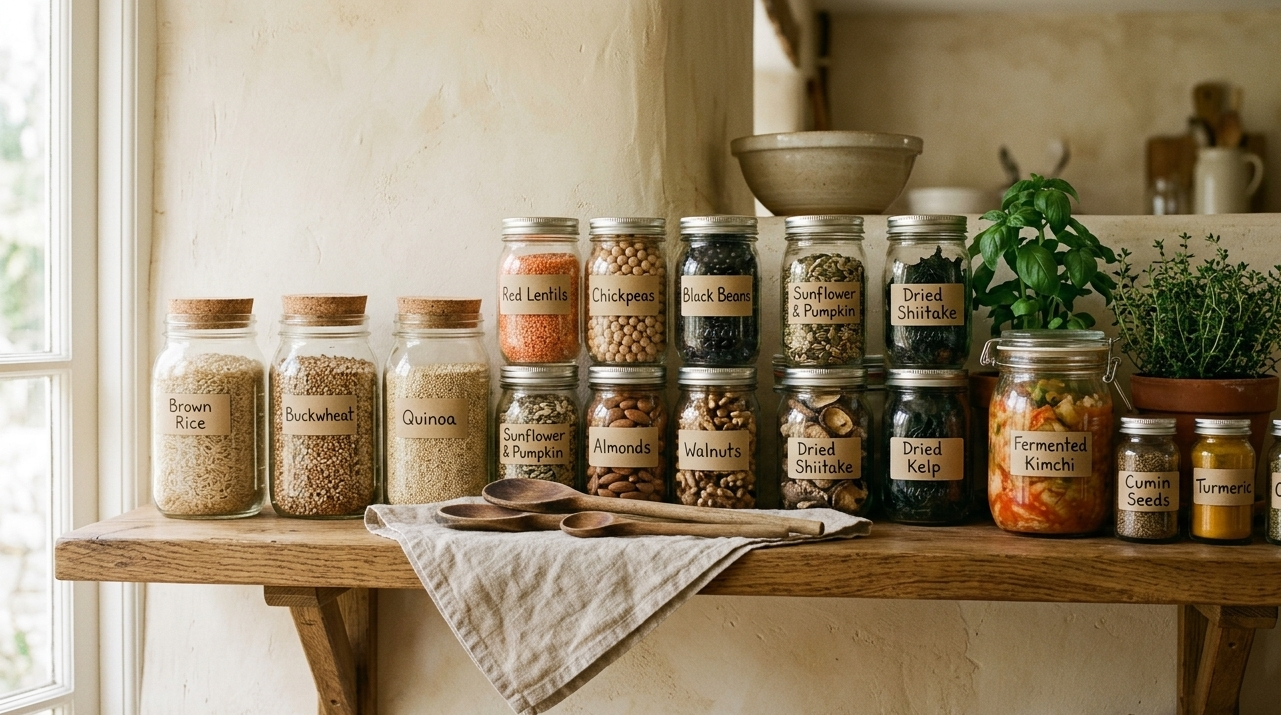
A look inside my kitchen and the grains, fermented foods, condiments, and simple ingredients that make healthy cooking effortless.
A well stocked pantry makes cooking well remarkably simple. When nourishing ingredients are already in the kitchen, balanced meals tend to happen naturally. In this article I am sharing the staples I keep at home, from grains and legumes to fermented foods, condiments, and a few tools that support everyday cooking.
One helpful principle when stocking your cupboards is this: avoid keeping foods you know you will regret eating.
Most of us do not make food decisions with perfect awareness. We eat what is nearby, visible, and easy. When we are tired, stressed, or distracted, the brain simply reaches for what is available. The contents of our cupboards quietly shape our habits.
If the kitchen is filled with ultra processed snacks, that is what will be eaten. If the shelves hold nourishing ingredients and satisfying whole foods, those choices become the natural ones.
Healthy eating becomes much easier when the environment supports it. Not through discipline, but through design.
One of the simplest ways to support your health therefore has very little to do with willpower. It begins with your cupboards.
When nourishing foods are within reach, eating well becomes the default rather than a daily negotiation. Meals come together more easily. Energy remains steadier. And the body receives the ingredients it needs to repair, regulate, and thrive.
This is not about rigid rules or perfect eating. It is about creating a kitchen that quietly supports wellbeing.
A cupboard of simple ingredients becomes a reservoir of possibility. A place where everyday foods turn into deeply nourishing meals.
Here is what you will usually find in mine.
My food philosophy in one sentence
Seasonal whole foods, cooked with variety, flexibility, and pleasure.
Always in my fridge
Seasonal vegetables, leafy greens, fresh herbs (parsley, coriander, chives), lemons, limes, avocados, sauerkraut or other fermented vegetables, homemade bone broth, homemade tofu mayo, homemade yoghurt, Sojade soy yoghurt, Nush almond yoghurt, leftovers from whatever I cooked the day before.
My weekly shopping routine
I shop at the farmers market once a week for seasonal vegetables, fruit, herbs, eggs, meat and fish and whatever looks vibrant that morning. I tend to load up on bitter salads, leafy and cruciferous vegetables.
Pantry staples
Brown rice, quinoa, buckwheat, millet, oats, soybeans, adzuki beans, mung beans, silken tofu, and a large variety of nuts and seeds.
Sea vegetables and dried foods
Nori, wakame, kombu, dried shiitake mushrooms, dried porcini mushrooms.
These store beautifully and simply need soaking to add minerals and umami to soups, broths, grains, and vegetables.
Fats of choice
Extra virgin olive oil, raw sesame oil, ghee, butter, tallow, chicken fat, coconut oil, coconut cream, tahini.
Fermented foods
Homemade sauerkraut, 72 hour coconut yoghurt, kimchi, gherkins, pickled daikon, tempeh.
Pasta alternatives
Mung bean pasta, soybean pasta, buckwheat spaghetti, soba noodles.
Nuts, seeds, and snack foods
Almonds, walnuts, sesame seeds, pumpkin seeds, sunflower seeds, hemp seeds, chia seeds, flaxseeds, dried dates, raisins, figs, mangoes. Organic dark chocolate. Wholegrain rice cakes, oat cakes, pumpernickel bread, and mochi. Chorizo!
Flours I keep
Brown rice flour, buckwheat flour, cassava flour, tapioca starch, coconut flour, almond flour, rye flour, spelt, and whole wheat flour.
I often mix flours to increase nutritional diversity.
Sweeteners I use
Rice malt syrup, molasses, honey, yacon syrup, maple syrup, sometimes blended with a drop of stevia or monkfruit powder.
Condiments that make everything better
Miso paste (white rice, barley, red), tamari, rice vinegar, mirin, ume seasoning, fish sauce, balsamic vinegar, apple cider vinegar, nori flakes, nutritional yeast.
Teas I drink
Bancha, genmaicha, matcha, soba tea, digestive herbal blends (chai, rooibos earl grey, ginger, calendula), calming herbal teas (chamomile, lavender, lemon verbena), detox teas (dandelion, nettle).
I use them intentionally to support digestion, the nervous system, and detoxification.
Freezer essentials
Animal proteins, chopped herbs, edamame, citrus zest, berries.
Freezing herbs and citrus zest makes it easy to add flavour to meals.
Water purification
Ideally whole house water filtration, otherwise under sink filtration, distillation with remineralisation.
Clean water matters not only for drinking but also for bathing and cooking.
Produce washing
An ozonator to clean fruits and vegetables and help remove pesticide residues, bacteria and toxins.
Cookware I trust
Stainless steel, cast iron, titanium coated cookware, glass baking dishes. For utensils, I only use wood and stainless steel - silicon spatula when really necessary. Glass and stainless steel food containers. Cling film and aluminium never touch my food.
My tip for healthy eating
A well stocked kitchen.
Simple ingredients, seasonal produce, a few fermented foods, good fats, nourishing grains and legumes.
When the kitchen supports you, eating well becomes the natural choice.
20 healthy pantry staples every kitchen should have
A well stocked pantry makes healthy cooking simple. These ingredients store well, provide excellent nutrition, and can be combined in countless ways to create balanced meals.
Brown rice, quinoa, buckwheat, oats, adzuki beans, edamame, mung beans, tofu and tempeh, eggs, coconut milk, extra virgin olive oil, butter, tahini, sesame seeds, almonds, hemp seeds, seaweed, dried mushrooms, tamari, apple cider vinegar and a selection of dried herbs and spices.
With these ingredients alone you can prepare soups, grain bowls, stews, salads, stir fries, and nourishing breakfasts.
My go-to quick pantry meals
Brown rice with vegetables and Miso tofu steak, soba noodles with green leafy vegetables, edamame and miso-tahini dressing, buddha bowl with quinoa, pickled vegetables, stir-fried tempeh, avocado, and bitter leaves, creamy cannellini and mushroom stew, brown rice porridge with bone broth, stir-fried mince, fresh herbs, and lemon juice and zest.
These meals come together quickly because the foundation ingredients are already in the cupboard. Many of these ingredients also feature in my recipes and seasonal meal ideas.
How to build a healthy pantry from scratch
Start slowly. Choose a few staple grains, legumes, healthy fats, and condiments. Add seasonal fresh produce each week and expand your pantry gradually.
A nourishing kitchen is built slowly, over time.